What to Cook With What You Have in Your Fridge (AI Makes It Instant)
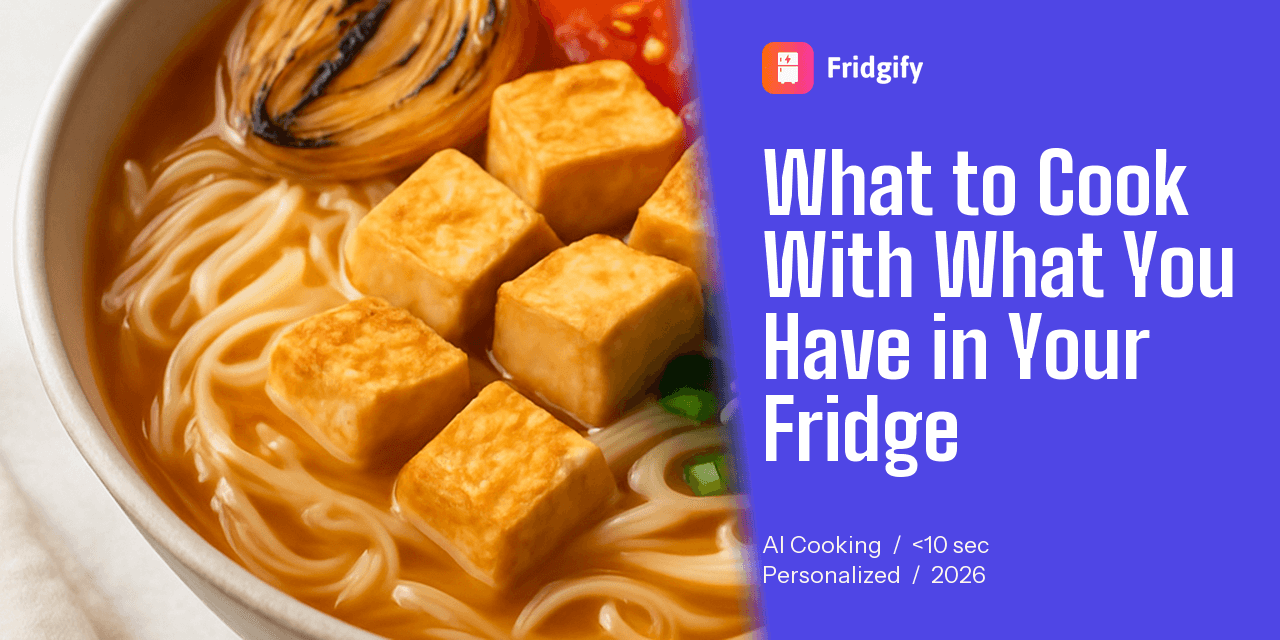
What to Cook With What You Have in Your Fridge (AI Makes It Instant)
You open the fridge. Eggs, half a block of tofu, wilting spinach, a lemon, leftover rice. You close it. Open it again. Nothing changes. The average household throws away 30–40% of the food they buy — most of it perfectly good ingredients that just never became a meal. The problem isn't your fridge. It's not knowing what to do with it.
What can I cook with what I have in my fridge?
You can cook almost anything — the question is which cuisine and format you want. With eggs, tofu, spinach, lemon, and leftover rice (a typical "random fridge" combo), you could make Korean-style kimbap, a Vietnamese-leaning fried rice, an Italian frittata, a Chinese egg drop soup, or a Middle Eastern-style scramble. The fastest way to find recipes that match your exact ingredients is an AI recipe app like Fridgify — input what you have, get 3–5 personalized recipes in under 10 seconds.
Most "I have nothing to eat" moments are actually "I have lots of options but no recipe organizing them" moments. AI apps remove that friction.
Why is "what to cook" such a common problem?
The "what to cook" problem affects 70–80% of households at least once a week, according to consumer cooking surveys. The cause is decision fatigue combined with mismatched recipes: traditional recipe sites assume you'll grocery-shop for the recipe, but real life works the other way — you have ingredients and need a recipe. Every recipe app that starts with "browse our 10,000 recipes" makes the problem worse, not better.
The result: 60% of weekday "I'll just order takeout" decisions happen because the household has ingredients but no clear plan to use them.
How does AI figure out what to make from random ingredients?
AI recipe apps use large language models trained on millions of recipes to recognize ingredient combinations and map them to cuisine patterns. The model identifies which dishes can be built from your ingredients (substituting where needed), ranks them by likelihood of success, and presents the top options. The whole process takes 5–10 seconds because the model already knows what works.
Behind the scenes, the AI checks for: ingredient compatibility (do these flavors actually go together?), technique difficulty (can this be made in your time budget?), nutritional balance, and cuisine coherence. The best apps also let you express preferences ("less spicy," "more protein," "30 minutes max").
What if I only have weird or mismatched ingredients?
Weird combinations are where AI shines. Tell Fridgify "I have leftover Thai curry, half a baguette, and goat cheese" and it'll suggest something like Thai-curry crostini with goat cheese drizzle — a recipe that exists in nobody's cookbook but actually works. Traditional recipe sites would show you nothing because no curated recipe matches.
The trick is that AI doesn't need to find an exact existing recipe. It can invent a workable recipe from scratch by combining technique knowledge (how curry, bread, and cheese work) with flavor pairing principles (rich + crunchy + salty + creamy = balanced bite). This is the fundamental difference from search-based recipe sites.
How fast can AI generate a recipe?
A modern AI recipe app generates a complete recipe — title, ingredients with amounts, step-by-step instructions, cook time, and nutrition info — in 5–10 seconds. Fridgify averages 8 seconds from "I have these ingredients" to "here's your recipe." Compare to 5–15 minutes of browsing on traditional recipe sites without finding a perfect ingredient match.
The speed unlocks a behavioral change: cooking becomes a sub-minute decision instead of a 20-minute deliberation. That alone is worth the install for most households.
Can I use an AI recipe app even if I'm not a confident cook?
Yes — AI apps are particularly useful for beginner cooks because the recipes adapt to your skill level. Set your difficulty preference to "Easy" and the AI generates recipes with simple techniques (sauté, boil, mix), ≤5 ingredients, and clear step-by-step instructions. No esoteric techniques, no specialty equipment, no assumed prior knowledge. Many beginner cooks report cooking 3× more often after installing an AI recipe app because the cognitive load drops dramatically.
The apps also explain why steps matter ("cool the chocolate so the gummies don't melt") — turning each meal into a small cooking lesson.
What are the best AI recipe apps in 2026?
The best AI recipe apps in 2026 are Fridgify (best for fridge-first cooking — input ingredients, get recipes), Plant Jammer (best for vegetarian-focused), and Whisk (best for meal planning across the week). Fridgify is the standout for the "what's in my fridge" use case because it's purpose-built for that workflow — no recipe browsing, no shopping list overhead, just instant recipes from your ingredients.
| App | Best for | Free tier |
|---|---|---|
| Fridgify | "What's in my fridge?" | Yes |
| Plant Jammer | Vegetarian recipes | Yes |
| Whisk | Weekly meal planning | Yes |
Try Fridgify
Stop staring at your fridge. Fridgify turns whatever you have into a real recipe in under 10 seconds — no browsing, no decision fatigue.
Download on the App Store · Get it on Google Play · fridgify.eodin.app
Frequently Asked Questions
How does AI help me decide what to cook with random fridge ingredients?
AI recipe apps analyze your available ingredients using large language models trained on millions of recipes. They identify compatible dishes, suggest substitutions, and generate personalized recipes in seconds, removing the guesswork and decision fatigue from meal planning.
Can AI recipe apps accommodate dietary restrictions or allergies?
Yes, most AI recipe apps allow you to set dietary preferences and allergies. The AI then excludes incompatible ingredients and adjusts recipes accordingly, ensuring the suggestions fit your specific needs.
Are AI-generated recipes suitable for beginner cooks?
Absolutely. AI apps can tailor recipes to your skill level by simplifying techniques, limiting ingredients, and providing clear, step-by-step instructions. This makes cooking more accessible and helps beginners gain confidence in the kitchen.
What makes AI recipe apps like Fridgify different from traditional recipe sites?
Unlike traditional sites that require browsing thousands of recipes, AI apps start with your ingredients and instantly generate recipes that fit what you have. They can even invent new recipes from unusual ingredient combinations, offering practical solutions when no exact recipe exists.
How quickly can AI generate a recipe based on my fridge contents?
Modern AI recipe apps typically generate a complete recipe—including title, ingredients, instructions, and nutrition info—in 5 to 10 seconds. This speed helps turn cooking decisions into quick, easy choices rather than lengthy deliberations.
Continue reading

How to Build a Bedtime Reading Ritual That Actually Sticks
A practical guide to building a bedtime reading ritual that lasts — five anchors that turn nightly story time into a habit your child reaches for.
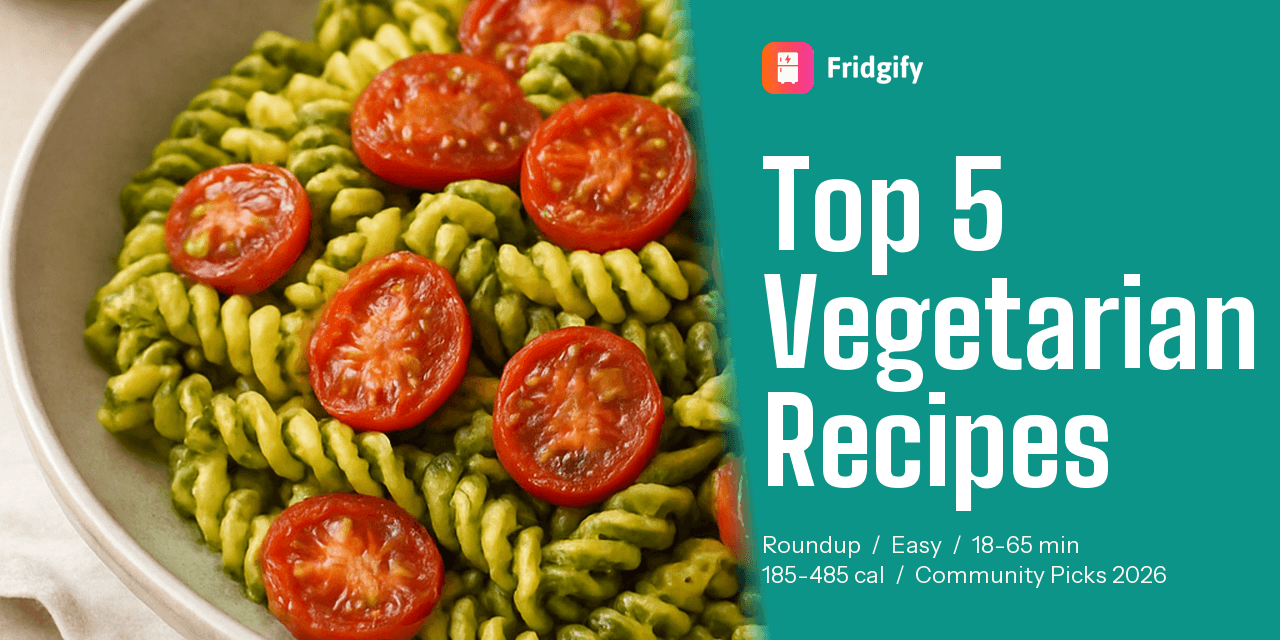
Top 5 Vegetarian Fridgify Recipes (No Meat, All Flavor)
Five top-ranked vegetarian Fridgify recipes from the past 12 months — Korean tomato-egg scramble, Vietnamese garlic potato stir-fry, kimchi fried rice with crispy tofu, soy-braised young jackfruit stew, and Middle Eastern pesto pasta.
Meet Fridgify: The AI That Turns Your Fridge Into Tonight's Recipe
Snap your fridge and get dinner ideas you can actually cook tonight. Fridgify is the ingredient-first cooking app for when you have no plan.